POSITIVE+

Behind the scenes of the portrait journey across Israel: encounters with the participants, preparation on set, and moments from the shoots.

A portrait photography exhibition

POSITIVE+

15 endocrine stories

Positive is a permanent photography exhibition by photographer Pini Siluk, commissioned by the Institute of Endocrinology, Diabetes and Metabolism at Sheba Medical Center as part of the vision for the Institute’s visitor centre, and installed throughout its working clinic.

The exhibition presents portraits of Israelis from diverse communities and backgrounds living with endocrine and metabolic diseases and conditions. Each portrait grew out of a personal encounter between the photographer and the participants, and the stories they chose to tell.

The medical condition is the starting point, but it does not define the portrait’s boundaries. At the centre are the people themselves: their challenges, choices, difficulties and successes, and the sources of strength they find along the way. Created through dialogue with the participants, Siluk’s photographs give expression to complex personal experiences and invite the viewer to meet the person beyond the diagnosis.

The visitor centre brings together medicine, science, history, technology and art. It was conceived to make repeated visits to the clinic a time of discovery, recognition and empowerment for patients and their families. Positive was created in partnership between the photographer and the Institute’s physicians. The presence of these portraits at the heart of the clinic embodies an approach to care that sees the whole person: their life story, their strengths, and their ability to cope, choose and shape their own life.

Photography and artistic creation: Pini SilukInitiative and curation: Dr. Ruth PratsikVision for the visitor centre: Prof. Amir Tirosh, Director of the InstitutePermanent exhibition commissioned and funded by: The Institute of Endocrinology, Diabetes and Metabolism, Sheba Medical Center, Tel Hashomer

“Positive is not an attempt to make illness a good thing. It is a choice about how we look at it.”
Pini Siluk
About the exhibition

What do we see when we lookbeyond the diagnosis?

The portraits touch on type 1 diabetes, Cushing’s syndrome, Graves’ disease, XLH (a hereditary bone disorder), osteoporosis, hyperparathyroidism, hypoparathyroidism, and von Hippel-Lindau syndrome. Each photograph is a personal, staged portrait with something to say, shaped by the life of the person pictured rather than by their medical record alone.

POSITIVE is a photography exhibition by Pini Siluk, who has lived with type 1 diabetes since he was 11. The perspective is therefore more than documentary: it comes from long, personal experience of living with a chronic condition.

In medicine

The word “positive” is associated with the discovery of a finding. In endocrinology, a diagnosis is not always described as a “positive test”; for many, though, it is the moment an unusual result or a medical condition receives a name and becomes part of their story.

In photography

A positive is the image we can see. Here, too, a medical story becomes a personal visual portrait: thought, staging, light, and color give form to things words and measurements cannot always convey.

In life

The portraits do not erase pain, difficulty, or limitations. They show what exists alongside them: humor, love, family, achievement, strength, hope, and the ability to keep building a life.

The Journey to the Portraits

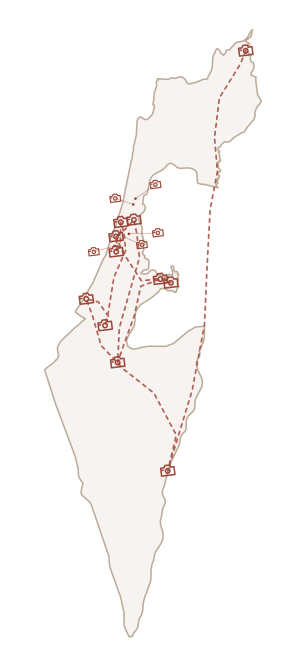
Commissioned by the endocrinology institute at Sheba, Pini set out in pursuit of the sunrise through the apple orchards of Majdal Shams and followed the sun until it set over Tzofar. He caught waves in Ashkelon and lifted weights in Kibbutz Ruhama. He boarded a train to Herzliya, entered a yeshiva in Rishon LeZion, and climbed to the upper floors of elegant office towers in Tel Aviv. He moved between worlds of care and concern for life, from a veterinary hospital in Kfar Saba to the medication room at Soroka Medical Center in Be’er Sheva. He breathed in nature at Ein Hemed and stood before art at the Israel Museum in Jerusalem. And amid it all, he poured 300 kilograms of sugar onto his studio floor - on a journey across the length and breadth of the country, seeking the human stories hidden behind places, faces and landscapes.

15 Endocrine Stories

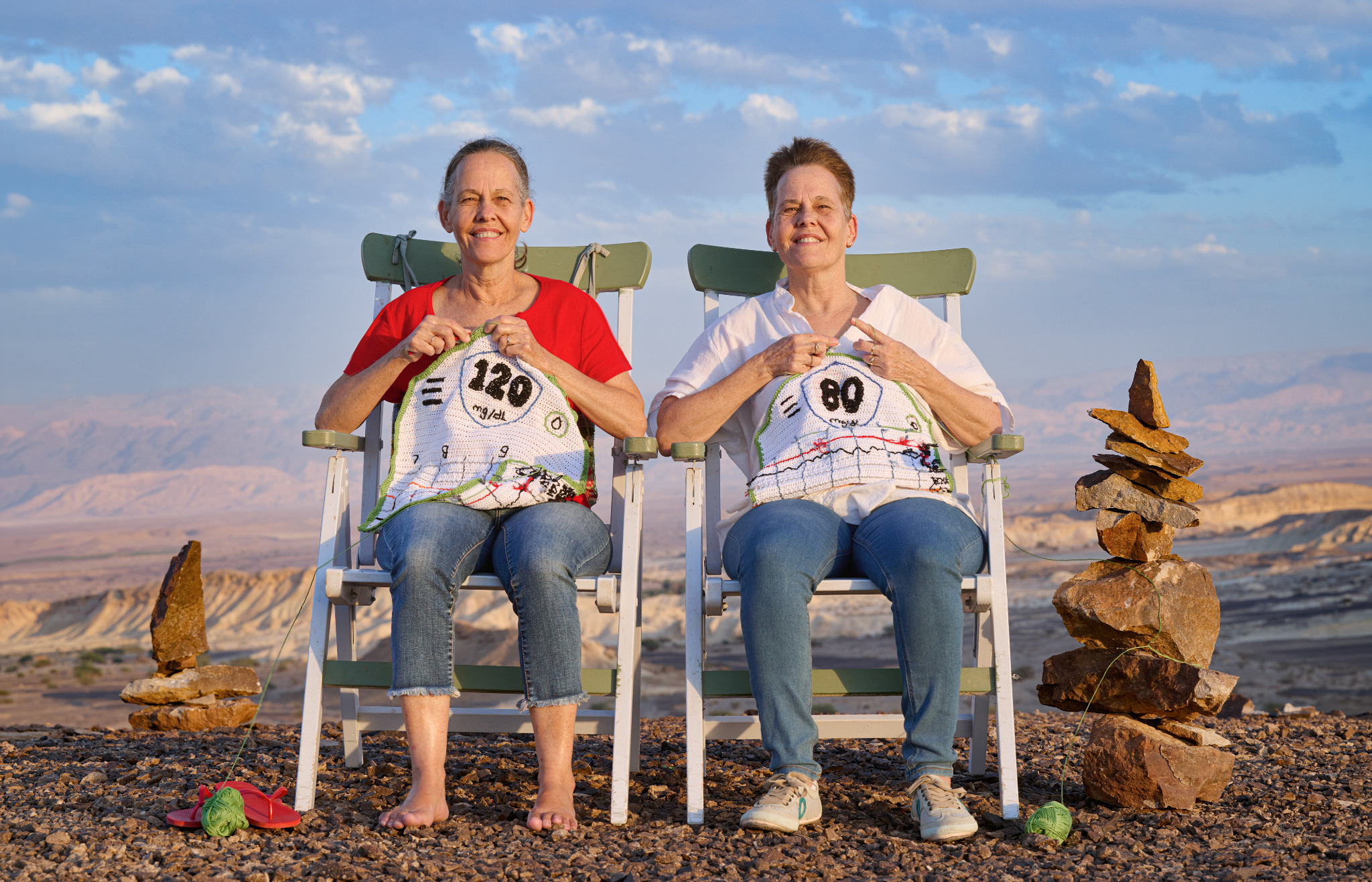
Smadar in a red shirt and Anat in a white shirt knitting glucose monitor designs with the numbers 120 and 80, seated in the Arava landscape
1 / 15
Portrait 1 / 15

80 to 120

Anat and Smadar

Type 1 diabetesTzofar

Anat and Smadar are identical twins. Both are grandmothers, both live in Tzofar in the Arava, and both love to knit. Type 1 diabetes also became part of both their lives, but at different times: Smadar, in the red shirt, was diagnosed at 50, and Anat at 62. When Anat received her diagnosis, alongside her fears was a sister who already knew the way. Smadar’s experience and support helped Anat cope, physically and emotionally, with her new reality.

At a favorite lookout over the hills of the Incense Route, with Tzofar in the background, they knit the numbers 80 and 120: the glucose readings that, for them, express the desire for balance. They turn the numbers they see on their screens into colorful handiwork, connecting the challenges of everyday life with a shared love.

Knitting brings them calm, interest, and a respite. Alongside the yarn and needles, diabetes care also finds its place in their daily routine. Over time, fears give way to familiarity and acceptance: diabetes is part of who they are, even in simple moments with family. Injecting insulin in front of their grandchildren becomes natural, and the children accept it that way too. Between knitting, treatment, and time with their grandchildren, they continue to create and enjoy life, with diabetes woven into it.

Yoed Klein in military uniform on a train, speaking on the phone, with his equipment and glucose meter in front of him.
2 / 15
Portrait 2 / 15

A New Route

Yoed Klein

Type 1 diabetesHerzliya

Yoed Klein was serving as a combat soldier in the Artillery Corps and commanding a classified unit when type 1 diabetes was first suspected. He was sent for extensive tests, and while he waited for the results, his doctor gave him a glucose meter to monitor his readings. At that point there was no diagnosis—only concern.

On a Thursday, on the train home for the weekend, his phone rang. It was his doctor. Yoed describes it as a call he knew, from the moment he answered, “there was no going back” from. The tests confirmed the suspicion: type 1 diabetes. From then on he would have to inject insulin, measure, calculate, and regulate his blood glucose—every day, for the rest of his life.

It also meant saying goodbye to the military path he had planned. Yoed knew he would not return to combat service as he had known it, and the news was painful. But alongside the grief, something else stirred: the fighting spirit he knew from the army. He decided to approach diabetes as a new mission—one with no finish line, but with work to do every day.

Instead of abandoning his plans for the future, he began pursuing them. Soon afterward, he enrolled in computer science, and he is now on his way to completing his degree.

With this photograph, I wanted to bring Yoed back to the exact moment everything changed: one phone call, on one train, on his way home.

There is something almost symbolic about receiving news that changed the course of his life while traveling on a railway line. The old route came to a stop—but Yoed did not remain beside the tracks. He simply kept moving, on a new route.

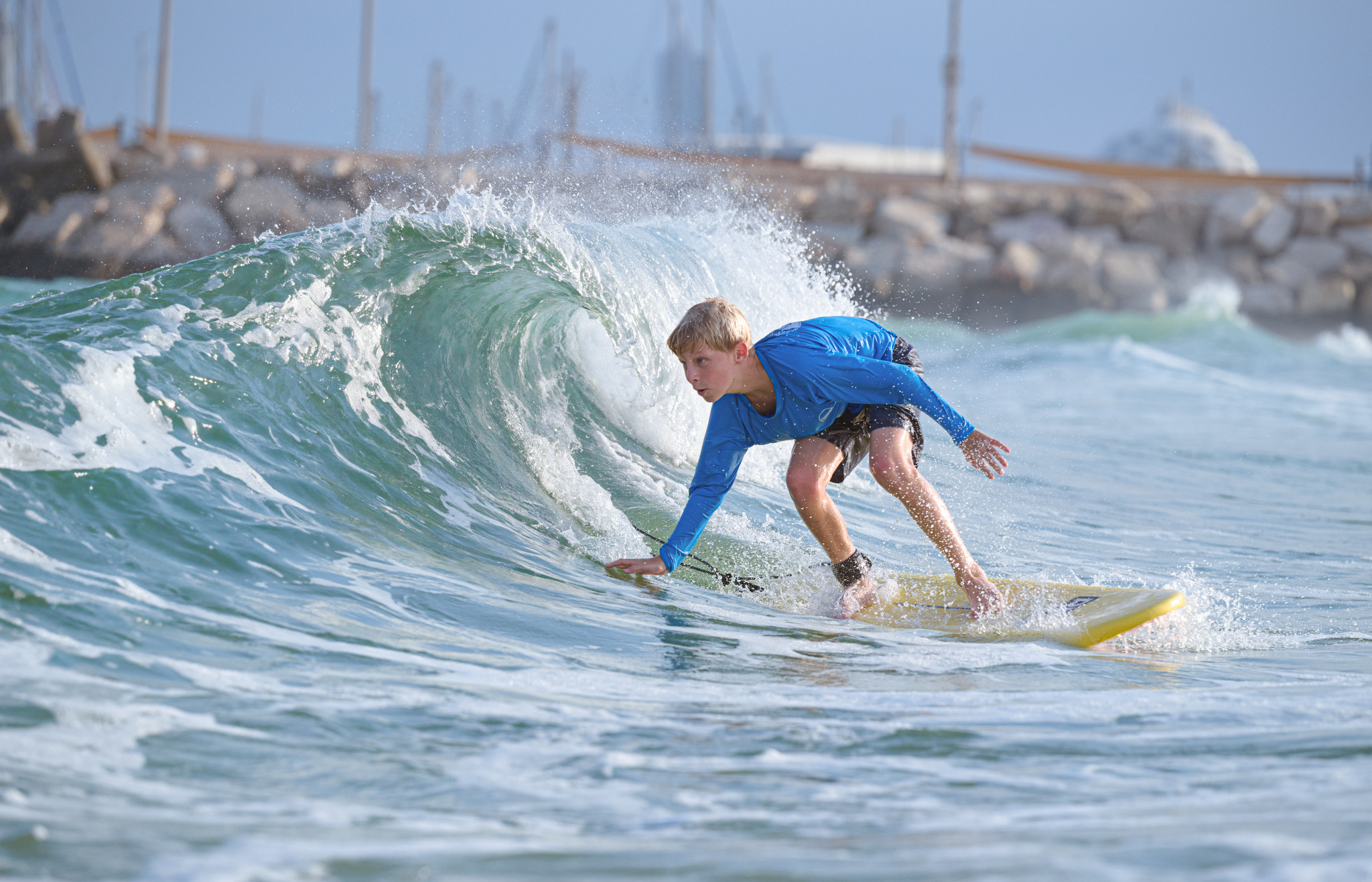
Elisha Ganani surfing a wave, crouched on his surfboard with one hand touching the water
3 / 15
Portrait 3 / 15

Riding the Waves

Elisha Ganani

Type 1 diabetesAshkelon

Elisha Ganani, an 11-year-old from Ashkelon, has been surfing since he was five. About six months ago, he was diagnosed with diabetes, and the familiar sea took on a new meaning. Alongside the waves outside, he learned to recognize the waves within: blood glucose levels rising and falling, like the winding line on his glucose monitor. There, too, the aim is to smooth out the fluctuations and stay steady within the target range.

At first, there was concern that he might not be able to return to the water, where he feels at ease, focused, and free. About two months after his diagnosis, he was already surfing again. Between calm and adrenaline, he is learning to listen to his body, monitor his glucose, and respond thoughtfully when it drops.

Sport has always been part of his life, from martial arts to football. Today, alongside treatment and monitoring, physical activity plays an important part in maintaining his glucose balance. On his surfboard, he also practices independence and confidence: falling, getting up, and finding his balance again in motion. The waves keep coming, and Elisha keeps surfing.

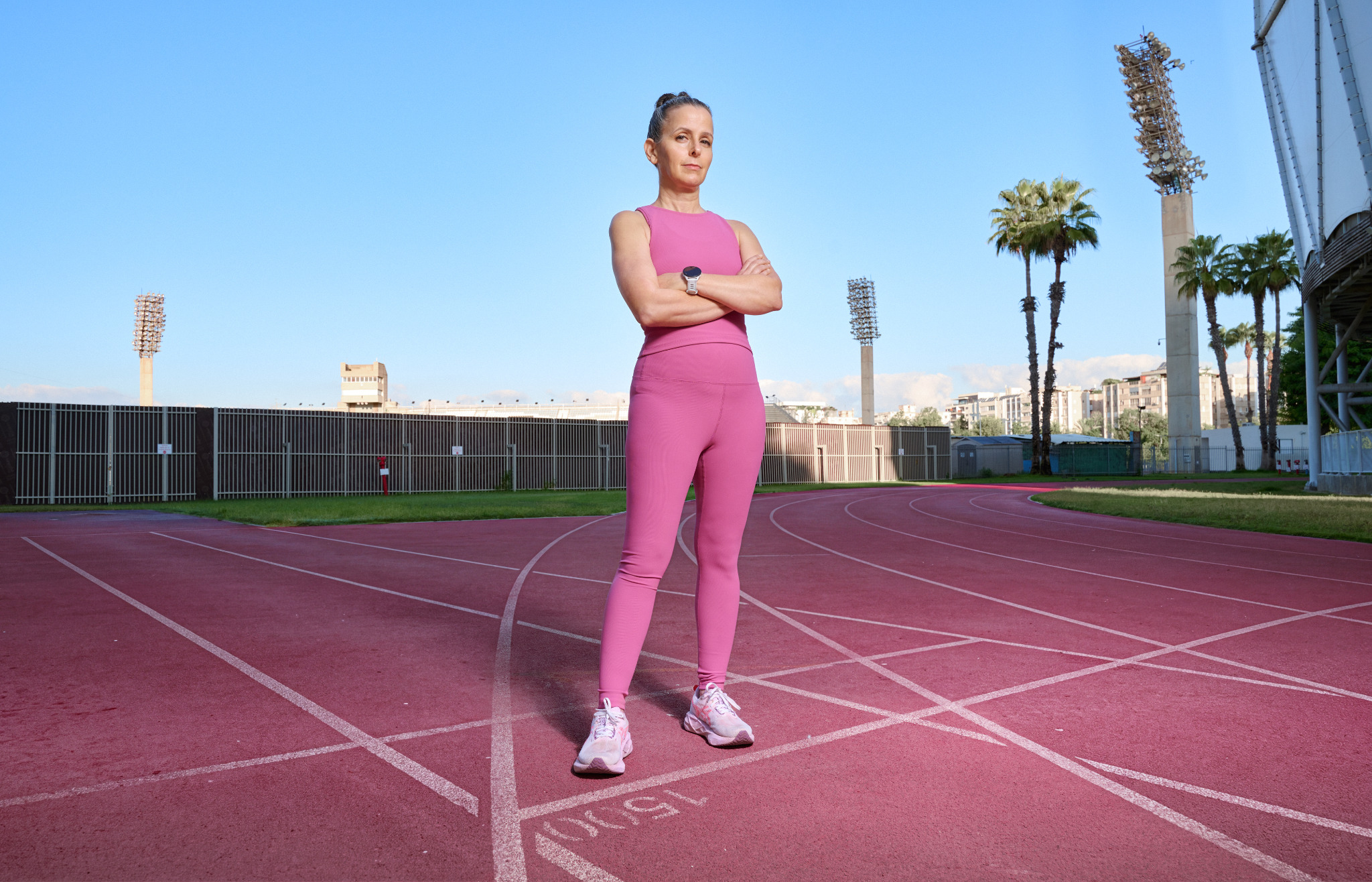
Lilach Barak in pink sportswear, standing with her arms crossed where the lines of a running track meet
4 / 15
Portrait 4 / 15

A Path to Victory

Lilach Barak

HyperparathyroidismKadima-Tzoran

Just before her fiftieth birthday, Lilach was diagnosed with breast cancer and underwent a mastectomy and reconstruction. About two years later, she was diagnosed with osteopenia, followed by hyperparathyroidism and a tumor in a parathyroid gland. She underwent two operations to remove the affected gland. More recently, a diagnosis of prediabetes was added. These challenges, arriving one after another and sometimes overlapping, left scars on both body and mind.

Every morning at sunrise, she heads out for a run, strength training, or yoga. She says the cold air cools the night’s hot flashes, and movement eases her back and joint pain, as well as her fears and anxieties. Every uphill stretch represents a difficulty for her; every run she finishes is a daily victory and a sense of regaining control over her body.

In the photograph, taken at sunrise at the Hadar Yosef athletics stadium, she stands where the running track’s curving, branching lines meet, echoing the course of her life and its many challenges. The pink of her clothing, a symbol of the fight against breast cancer, is echoed in the color of the track, connecting her struggle with the place where she finds relief. Amid all the lines, Lilach stands at the center: every morning, she chooses her own path again, step by step.

Noam Inbar at her office desk with scales, sugar cubes in one pan and her hand in the other, against the Tel Aviv skyline
5 / 15
Portrait 5 / 15

A Point of Balance

Noam Inbar

Type 1 diabetesGivatayim

Noam was in her early thirties, at the height of her professional drive, when she was diagnosed with type 1 diabetes. She held key roles at startups and lived between Israel and the United States. Advice to slow down seemed far removed from the life she had built. After about three years of denial, and with the support of the right medical team, she learned to make room for diabetes while continuing to pursue her ambitions.

During a professional panel in front of a full auditorium, a low-glucose alert on her watch accompanied a moment when her thinking became clouded and words escaped her. She managed to continue, but the experience brought home the attention that glucose balance requires, even amid demanding work.

Today, she lives at peace with diabetes and is a partner at a venture capital fund. Photographed in her office on a high floor of the Landmark Tower in Tel Aviv’s Sarona district, the sugar cubes in one pan of the scales and her hand in the other express a daily search for balance: in her glucose levels, between work and life, and between the desire to move forward and listening to her body. Amid all she does, she is learning to make room for her health, herself, and the enjoyment of life.

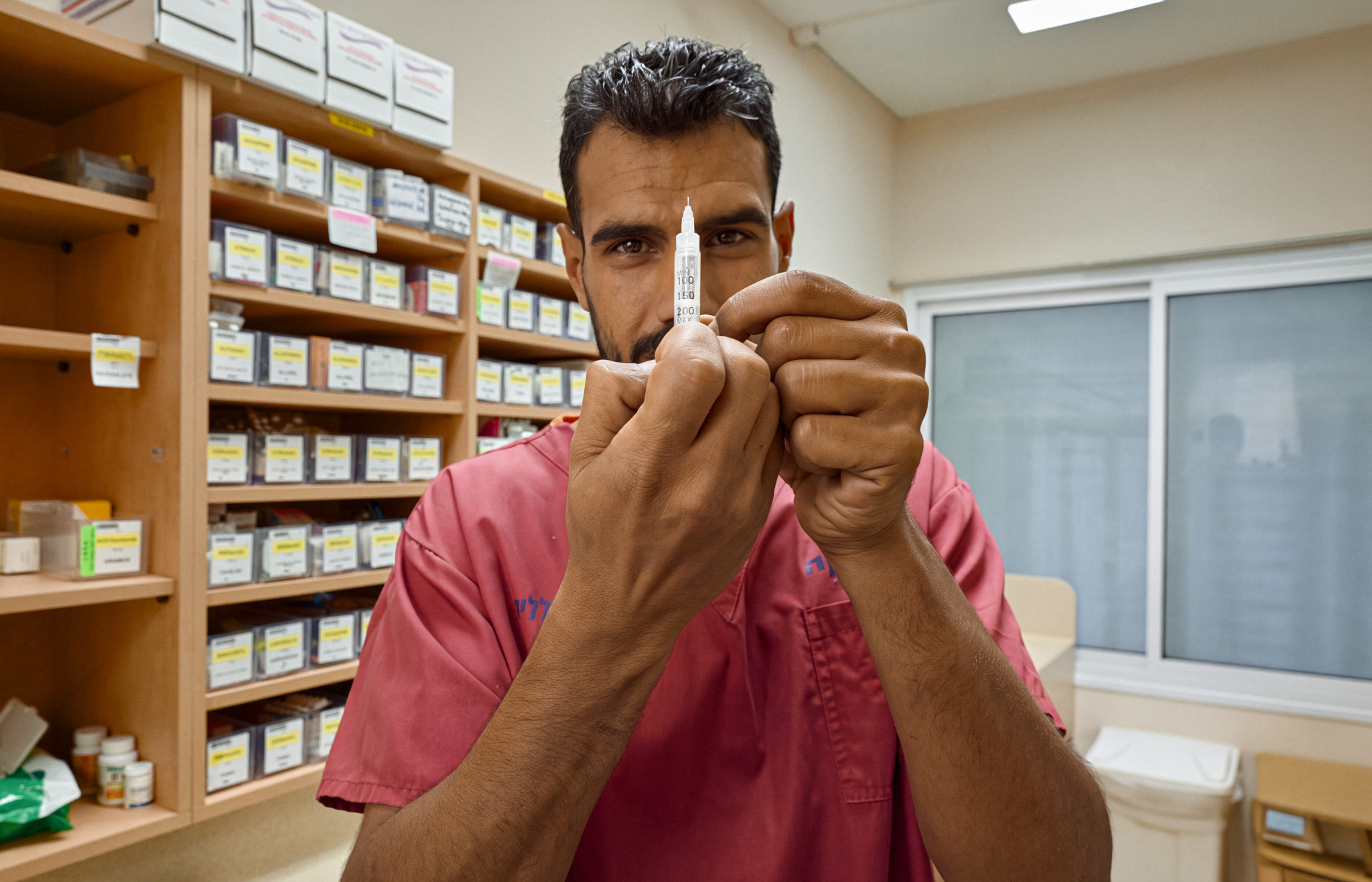
Abed Abu Sbaya in medical scrubs, holding a syringe in front of his face in a hospital room
6 / 15
Portrait 6 / 15

A Voice to Be Heard

Abed Abu Sbaya

Type 1 diabetesAr’ara in the Negev

Abed Abu Sbaya, 33, is married and a father of four. He lives in Ar’ara in the Negev, works as a nurse in the urology department at Soroka Medical Center, and lives with type 1 diabetes.

In the Bedouin community where he grew up, he says, diabetes is still sometimes accompanied by shame and secrecy. Young people and women avoid revealing their condition, sometimes even removing their pumps and sensors so that no one will notice.

Abed chooses the opposite path. Rather than hiding his diabetes, he wants to be an ambassador for openness, awareness, and care.

“I’m not ill. For me, diabetes is not an illness, but something to navigate,” he says.

As a nurse and someone who lives with diabetes himself, he can make medical information accessible in simple, clear, and compelling language. He wants to share the knowledge and experience he has gained, particularly with those who are still afraid to speak openly.

His message is clear: there is nothing to be ashamed of. There are things we can do.

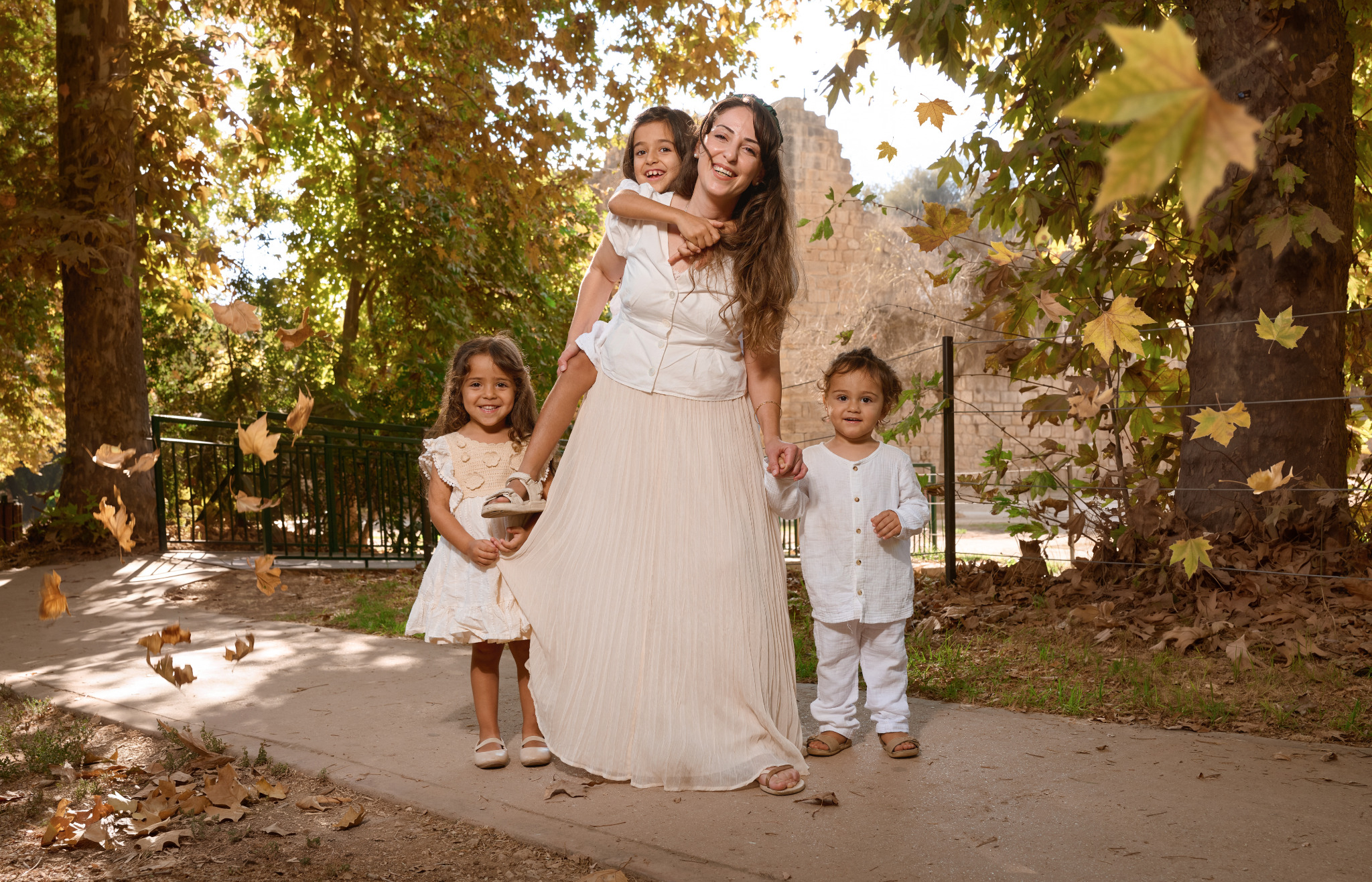
Galit Rahamim at Ein Hemed carrying her eldest daughter on her back, with her two younger children beside them.
7 / 15
Portrait 7 / 15

Stronger Than Ever

Galit Rahamim

OsteoporosisBeit Shemesh

Seven years ago, shortly after the birth of her eldest daughter, Galit tried to pick her up to change her diaper. A sharp pain shot through her back; she feared she might faint while holding the baby. Ten vertebral compression fractures were later found, caused by osteoporosis. Unable to care for her daughter as she had dreamed, she moved in with her mother-in-law to get help. “It’s a wound that still makes me cry,” she says.

The girl on her back in the photograph is that same baby. She is seven now. For years, the thought of carrying her again brought fear, even as Galit grew stronger. We chose to photograph them at Ein Hemed, a place Galit loves to visit with her children. Surrounded by nature, which gives her a sense of healing, she dared to carry her eldest daughter on her back again.

Her body has been through a great deal in building this family. Now, surrounded by her children, she once again carries the daughter she could not lift before. The fear is still there, but in this moment she is stronger than ever.

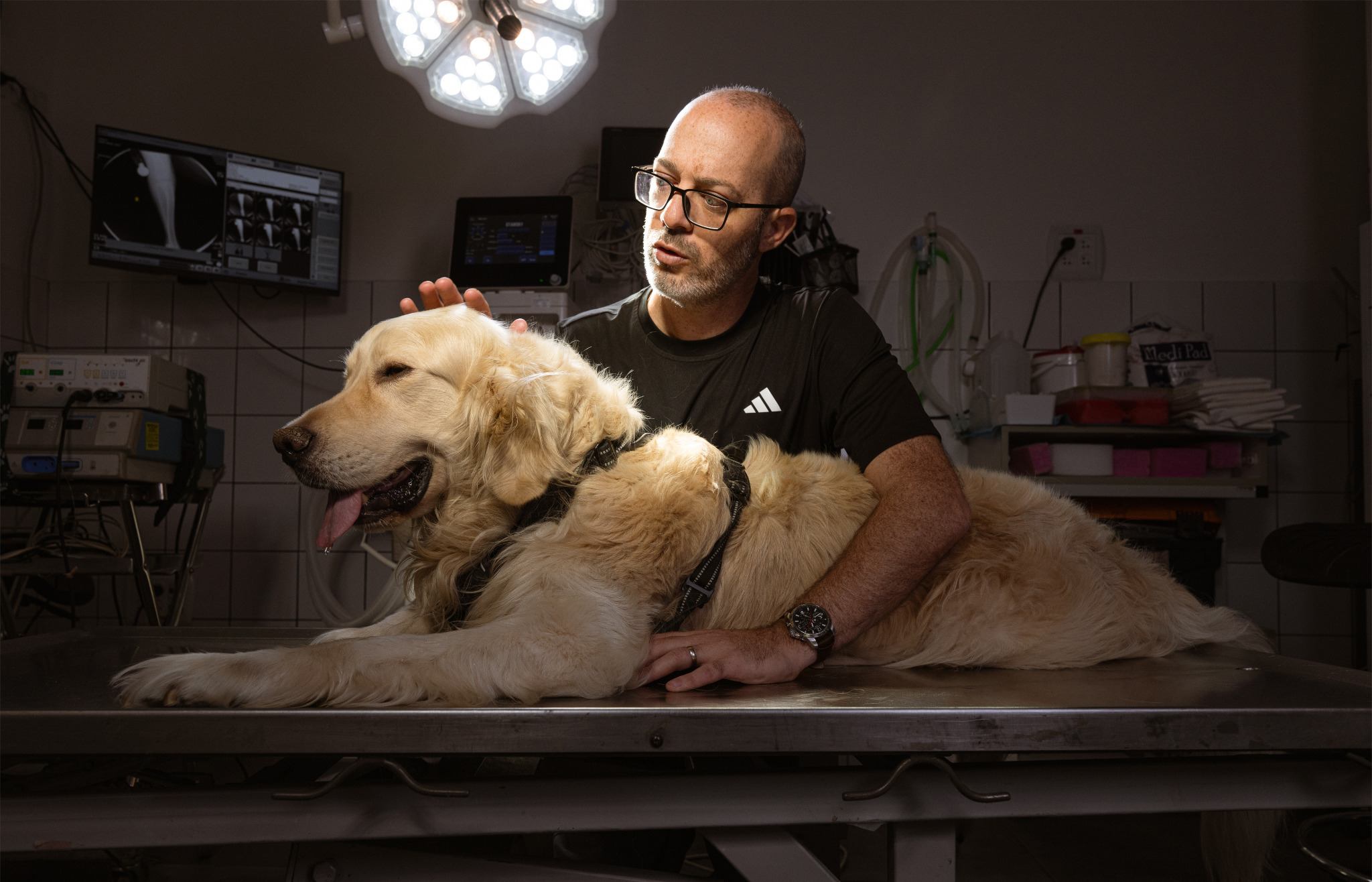
Uri Matzri embraces his dog Max on a table in a veterinary operating room, beneath the surgical lamp
8 / 15
Portrait 8 / 15

His Best Friend

Uri Matzri

Graves’ diseaseHolon

Uri Matzri, 45, is married and a father of three. In 2024, he was diagnosed with Graves’ disease, which affected his vision and caused him to see double. After a complex course of treatment with Tepezza, his vision became clear again, but the disease has recently flared up once more. Despite the disappointment, Uri is determined to keep fighting for his health.

In a veterinary operating room, beneath the bright light of the surgical lamp, Uri was photographed at a moment when he was the supporter rather than the patient. Beside him lies Max, his six-year-old dog, who has a heart condition that has caused his heart to enlarge, as well as kidney failure. Moments before Max was anaesthetised for surgery at the Havat Da’at veterinary emergency centre in Kfar Saba, Uri lowers his head towards him and wraps him in his arms. Amid the cold room and medical equipment, this simple gesture becomes a focus of warmth and humanity.

Uri, who knows all too well the fear, uncertainty and struggle of illness, gives his best friend what he himself needs — reassurance, love and hope.

Sometimes, just when our vision falters, what truly matters becomes clearer. And in the fight for life, it does not always matter who needs help and who offers it — what matters is the choice to keep fighting.

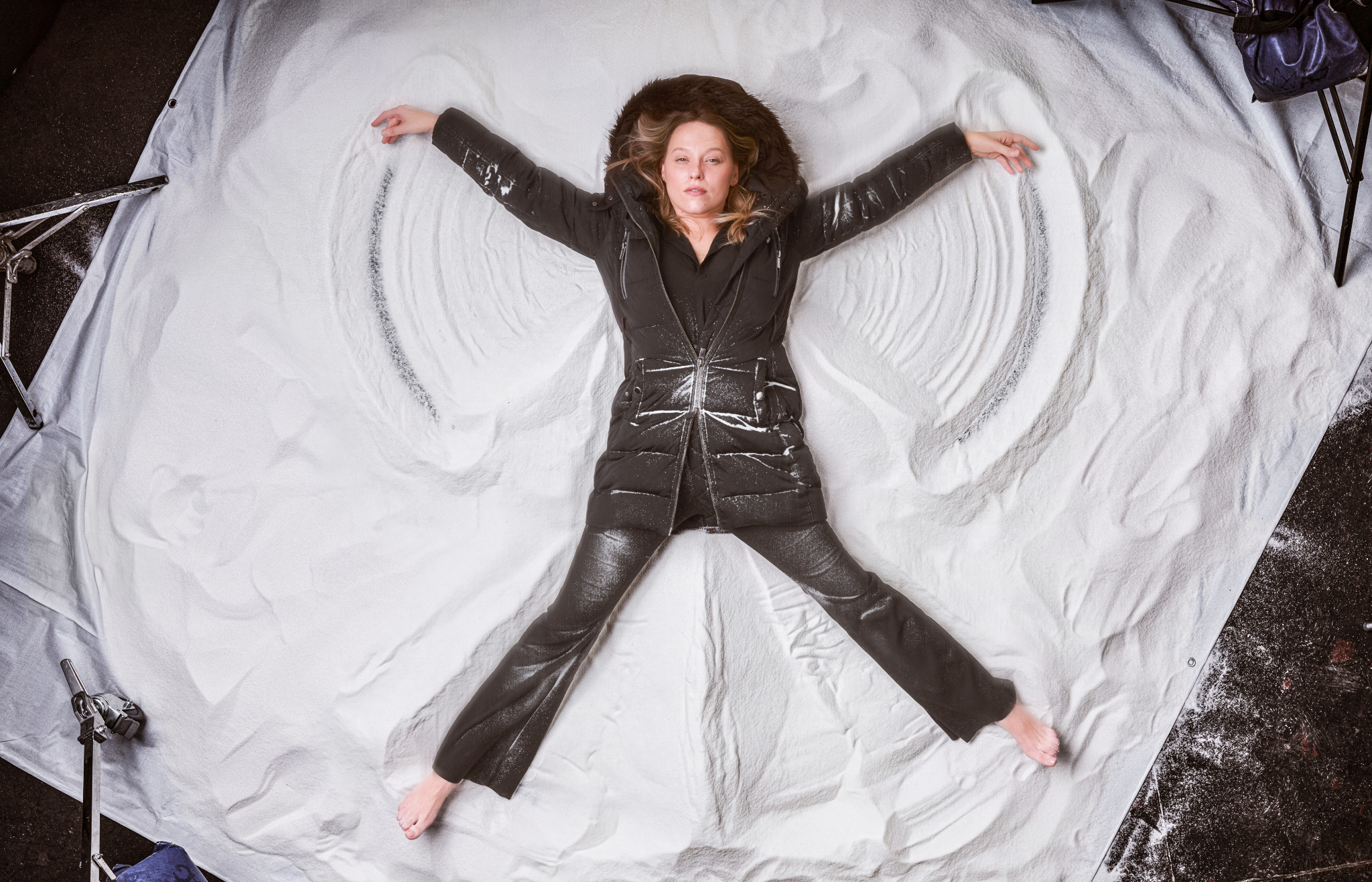
Anika Yakim lying with her arms outstretched on a bed of white sugar in a studio.
9 / 15
Portrait 9 / 15

The Butterfly Effect

Anika Yakim

Type 1 diabetesRamat Gan

One day, alone abroad, diabetes brought Anika down into the snow—literally. She experienced severe hypoglycemia. For about twenty minutes she lay there paralyzed, her vision coming and going, unable to call for help. She knew this was no ordinary low. “It’s a miracle I survived,” she says.

The days passed, and Anika thought the episode was behind her. But her body remembered what her mind tried to forget. For roughly two years afterward, every reading below 300 felt like the edge of an abyss; the sensations of a low would come rushing back. To “survive,” she kept her blood glucose high, far from the danger she had experienced, until she realized that the fear itself had become something she needed help with.

Anika was diagnosed with post-traumatic stress disorder. It was not her imagination, not weakness, and not something she could simply “get over.” With time, treatment, and a great deal of support, she found her way back to balance.

Today, when she lies down in the snow again, it is no longer snow. It is three hundred kilos of sugar on the studio floor. The same white, the same pose—but this time she tells the story in her own words: “I control it. It doesn’t control me.”

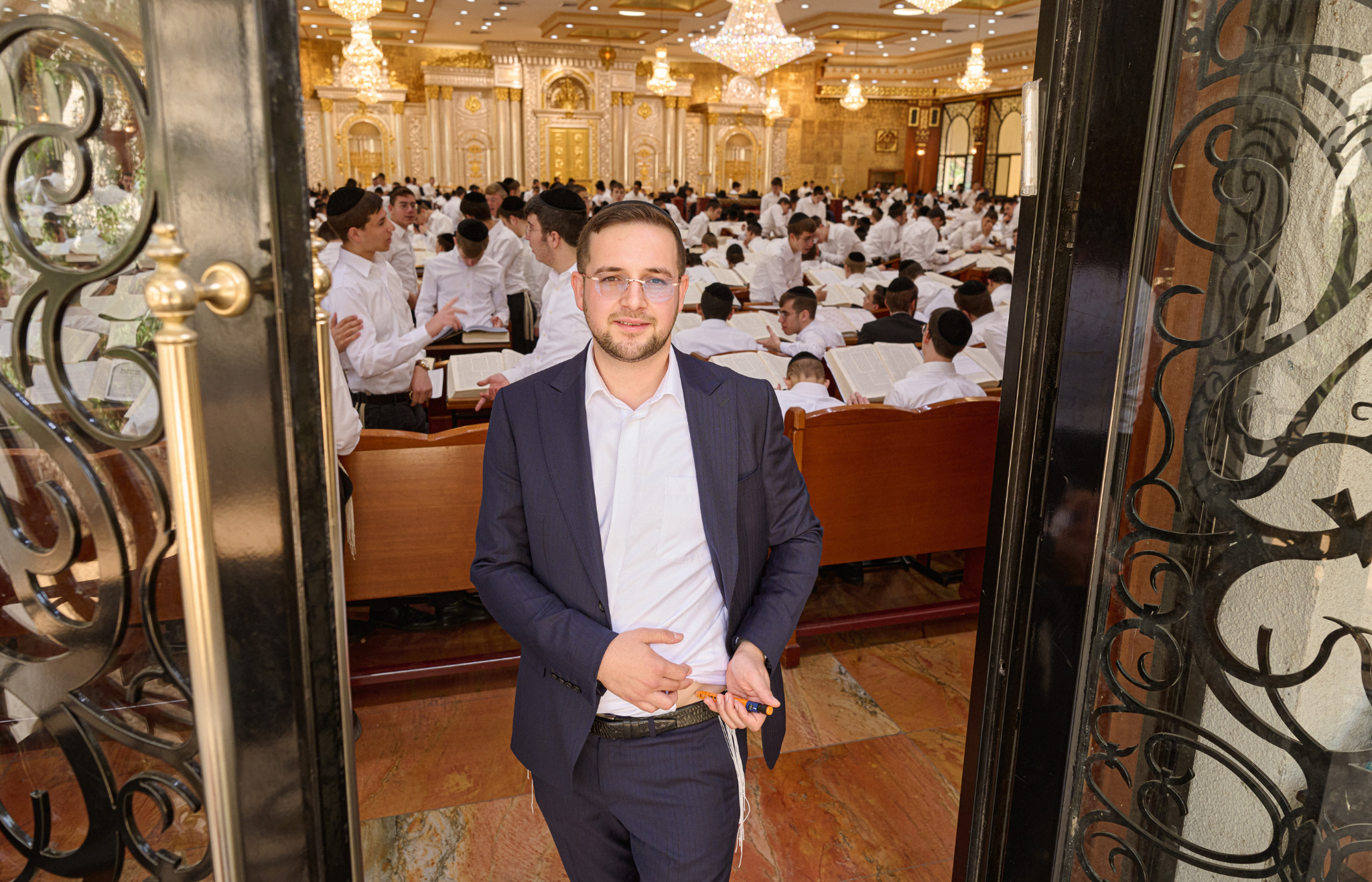
Elchanan Sharbani in a suit, administering an insulin injection at the entrance to a busy yeshiva study hall
10 / 15
Portrait 10 / 15

Managing, Not Managed

Elchanan Sharbani

Type 1 diabetesBnei Brak

Elchanan Sharbani, 28, is married to Yael and a father of three. He is used to making big decisions.
As CEO of the Ateret Shlomo yeshiva network, with more than 15,000 students across 45 branches throughout Israel, he manages a complex organization and carries considerable responsibility.
But during his first year in the role, he received a diagnosis that had appeared in no work plan: diabetes.

At first, he felt his world had stopped. Later, drawing on his faith in God, he made a decision: he would manage his diabetes, rather than let it manage him.

With the support of the medical team at Sheba, he adopted a balanced diet, incorporated physical activity, and makes time for rest, even within a demanding schedule.

He chooses to manage his diabetes openly and naturally, wanting to show others that there is no need to hide the challenges and that it is possible to live a full life alongside them.

For Elchanan, diabetes went from an unsettling diagnosis to an opportunity for positive change. A man accustomed to managing thousands of people learned that his most important responsibility begins with managing his own health.

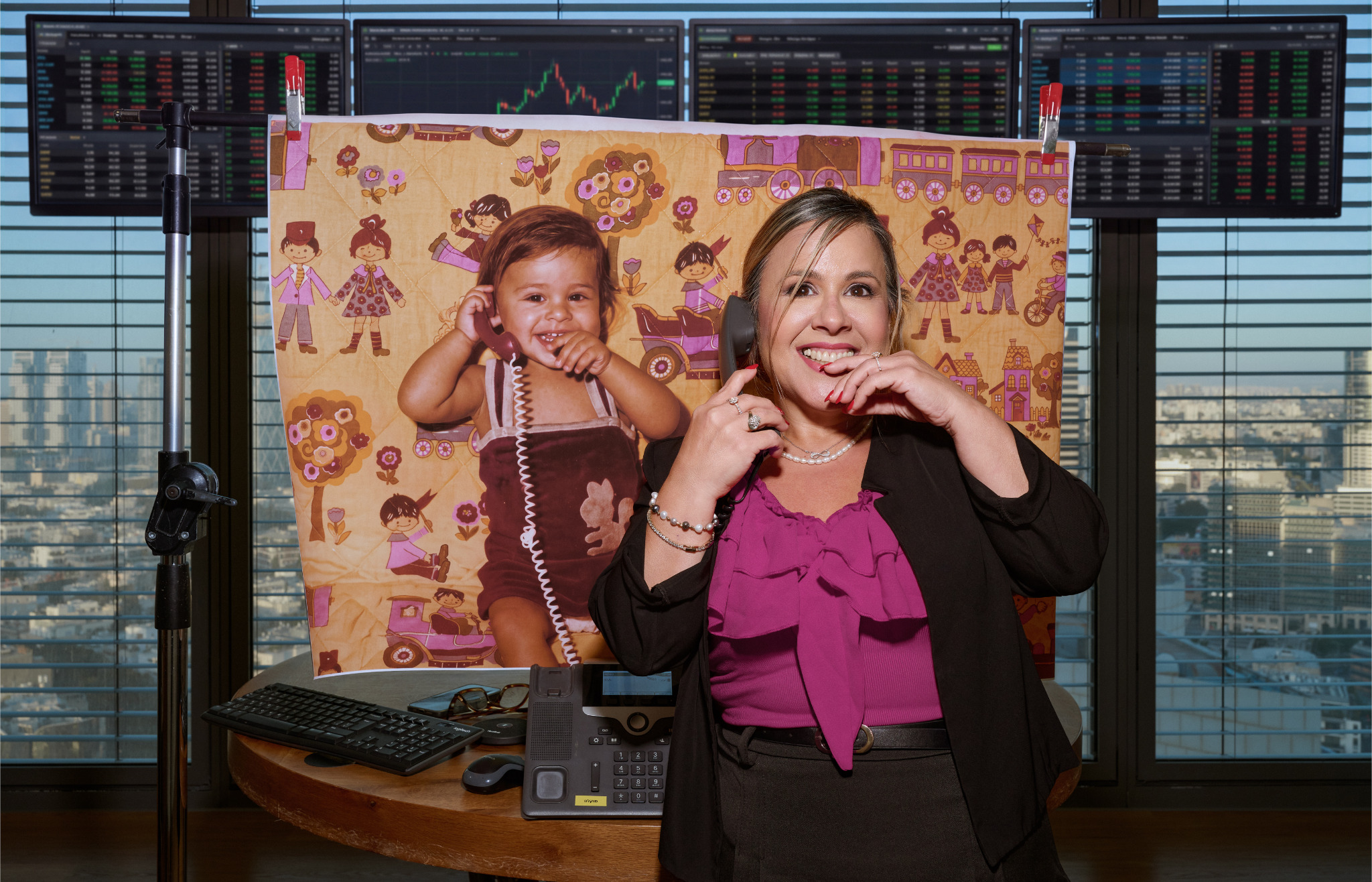
Mirav Gatnio in an office beside a photograph of herself as a child; both hold a telephone receiver in a similar pose.
11 / 15
Portrait 11 / 15

“You Can Do Anything”

Mirav Gatnio

XLH · hereditary bone disorderKfar Yona

Mirav was born with XLH, a hereditary bone disorder that affects growth and causes pain, weakness, and short stature.
Ever since she was the little girl in the photograph, she has carried the words her mother instilled in her: “You can do anything, and you are just like everyone else.”

Alongside surgeries, limitations, and daily struggles, her mother’s faith gradually became Mirav’s belief in herself and the strength to fight for the life she wanted. She built a 26-year career at the First International Bank of Israel, became a capital markets analyst, completed a degree, earned an investment advisory license, started a family, and had two sons.

Seven years ago, she led a campaign to have Crysvita included in Israel’s national basket of covered medicines for her son, now 18, who also lives with XLH, and for others. She founded the group “Willpower for Change.”

Today, facing the child she once was, she shows that amid obstacles there can still be love, fulfillment, joy, and the small victories of everyday life.

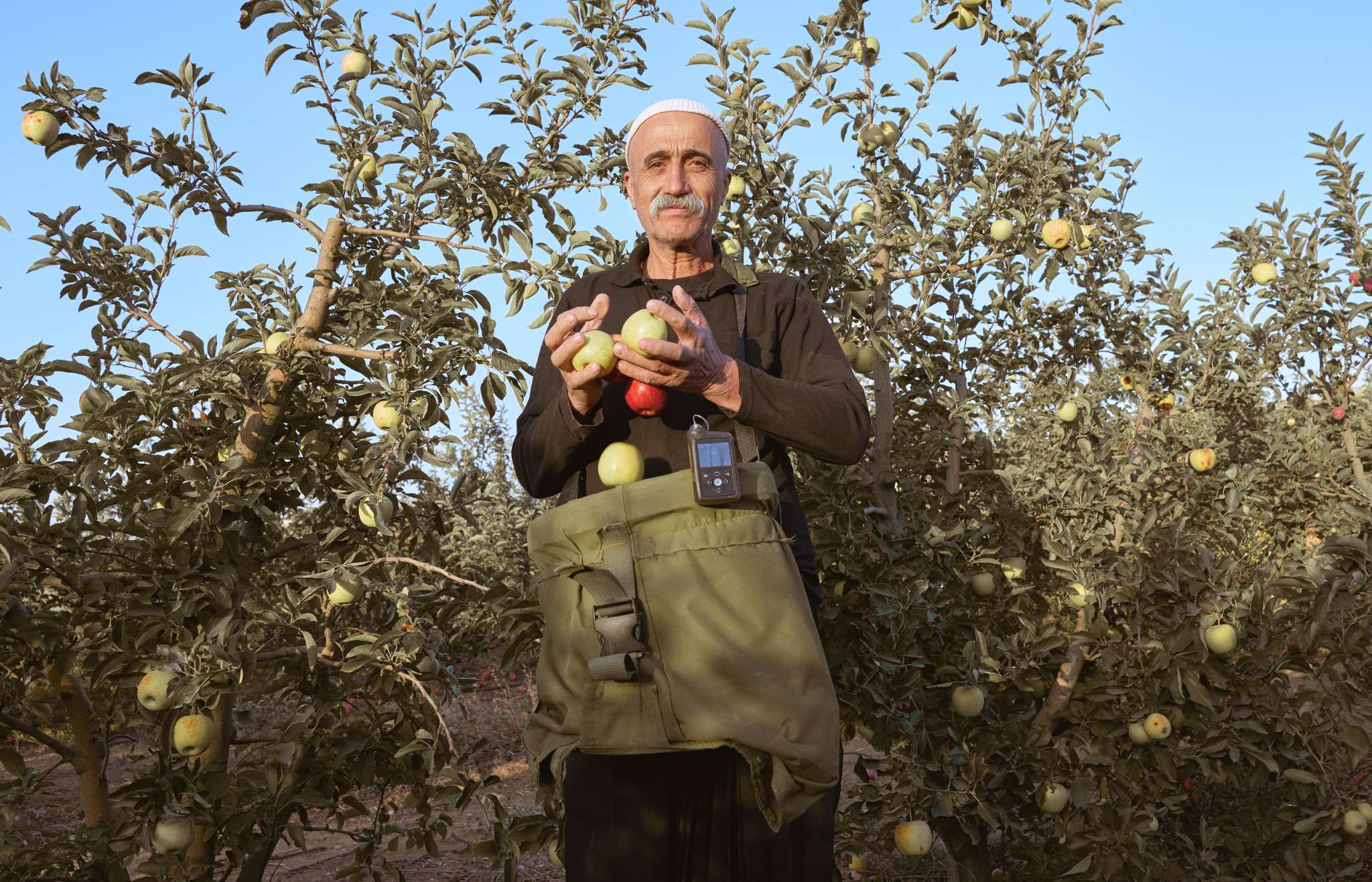
Hamad Samara gathering apples in his orchard in Majdal Shams, with his glucose monitoring device and insulin pump on his picking sack
12 / 15
Portrait 12 / 15

A Place of Healing

Hamad Samara

Type 1 diabetesMajdal Shams

Hamad Samara, 63, grew up among the apple trees in the orchard of his late father, Ali. From the age of 12, he learned about the land, the changing seasons and the fruits of hard work. As an adult, he chose to work as a truck driver alongside his work in the orchard, limiting the time he could devote to the land. Only decades later, when life forced him to pause, did he find a way to deepen his connection to his roots.

In 2015, he was diagnosed with a pancreatic neuroendocrine tumor associated with von Hippel–Lindau syndrome. During complex surgery, his pancreas, spleen and right kidney were removed, and he subsequently developed insulin-dependent diabetes.

After the surgery, he purchased an additional apple orchard of his own in Majdal Shams, while continuing to work as a truck driver. The place where he grew up became the place where he chooses to keep growing.

In the photograph, among the apple trees, Hamad gathers the fruit into his picking bag, on which rests the glucose monitoring device connected to his insulin pump. The technology that enables him to live with his condition meets the land that gives him strength.

With a smile, Hamad calls his orchard a “place of healing,” adding a proverb he loves: “An apple a day keeps the doctor away.”

For Hamad, every apple he picks is far more than a piece of fruit. It is a memory of his father, a connection to his roots and to the land, and a reminder that sometimes the path to healing begins right where it all began.

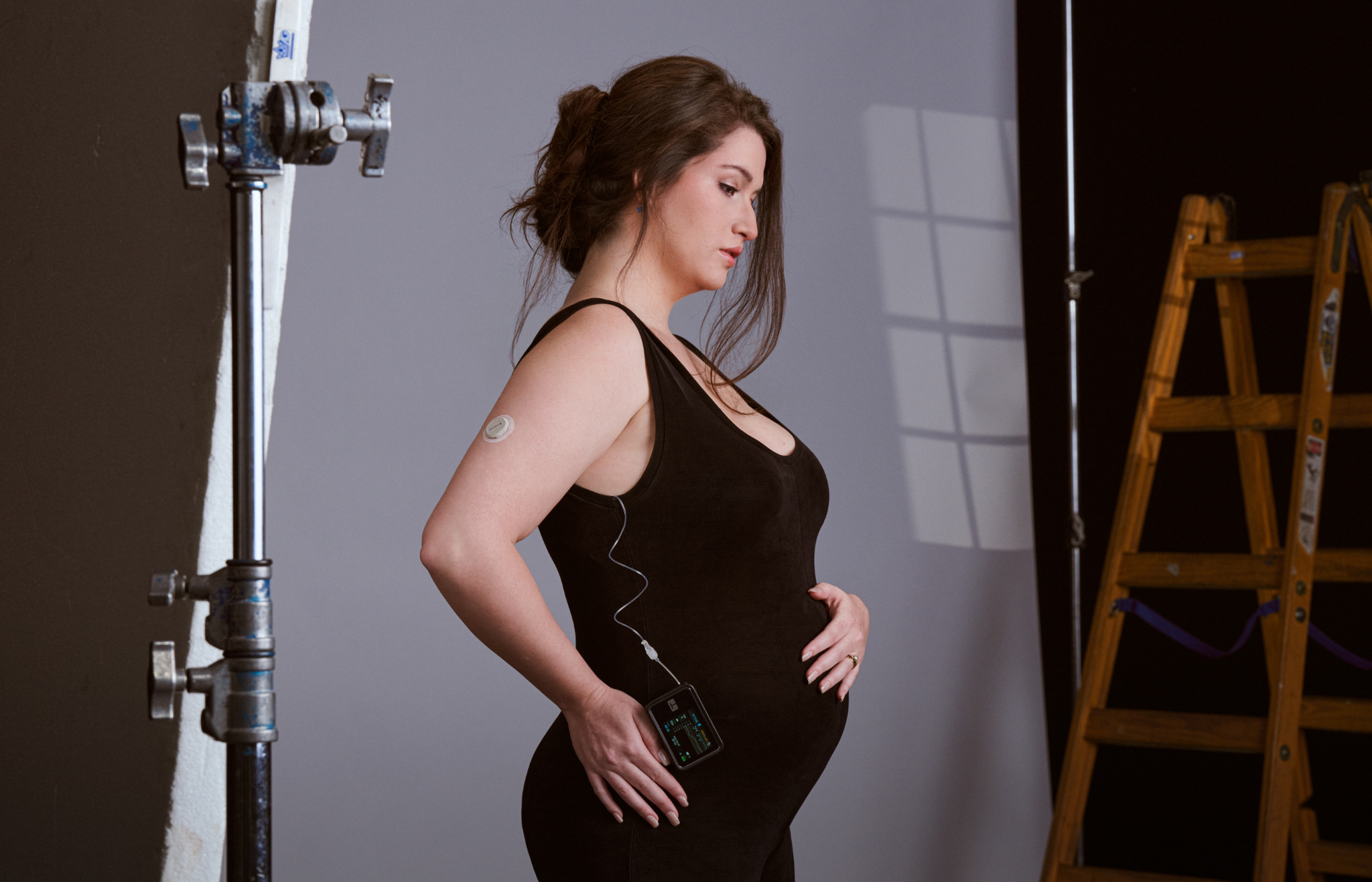
Yuval Kasher, pregnant, rests a hand on her belly and holds an insulin pump, with a glucose sensor on her arm in a studio
13 / 15
Portrait 13 / 15

A Dream at Risk

Yuval Kasher

Type 1 diabetesRa’anana

While other children dreamed of becoming firefighters or police officers, Yuval dreamed of being a mother. At four, she was diagnosed with type 1 diabetes, but the dream remained.

At 24, she became a mother to Ella, who made her dream come true. Ever since she learned to speak, Ella has been asking for “a baby sister.”

Behind that simple request lay two years of fertility treatments, an ongoing struggle to balance her glucose levels, and hormones that changed everything Yuval had known. When the long-awaited pregnancy arrived, it brought frequent tests, hospital stays, and close monitoring at a high-risk pregnancy clinic.

After 26 years with diabetes, Yuval had to learn about her body all over again. Even the insulin doses she knew changed from month to month.

And yet, amid the tests, vomiting, and uncertainty, she also finds moments of happiness. At every medical visit, she gets another glimpse of the baby girl on the way.

Because behind all the numbers, tests, and risks lies one dream, which this time belongs to Ella too: becoming a big sister.

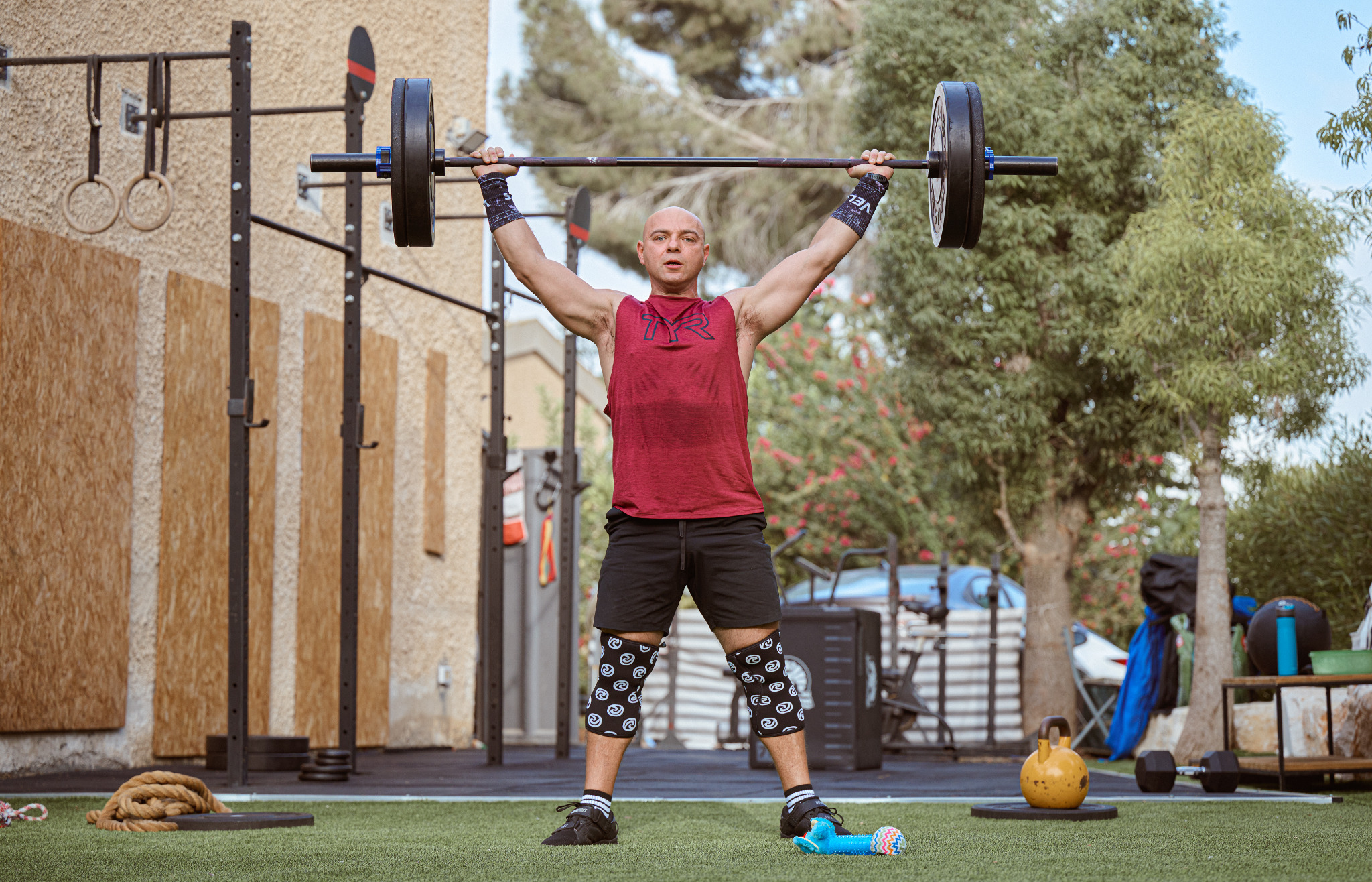
Dan Peer holding a barbell overhead in his private training area in the backyard of his home in Kibbutz Ruhama
14 / 15
Portrait 14 / 15

“Not Cut Out for Sport”

Dan Peer

Type 1 diabetesKibbutz Ruhama

As a child, after two episodes of hypoglycemia during floor gymnastics training, Dan Peer was told he was “not cut out for sport.” Those words could have closed a door for him. He chose to open it again.

Dan was diagnosed with type 1 diabetes at the age of four. He has come a long way since then: from insulin injections and manual glucose checks to managing his diabetes with advanced technology; from a child excluded from training to an athlete who practices CrossFit five times a week. In 2023, he placed eighth in his age category at the Israeli fitness championships.

Today, he is a physiotherapist and a father of two, living in Kibbutz Ruhama.

In the photograph, taken in his private training area in his backyard, he performs an Olympic snatch: in one movement, the heavy barbell rises from the ground to a full overhead lockout. A moment that demands strength, precision, and control — just like life with diabetes.

The weight he lifts is not diabetes. It is everything he was told he could never do.

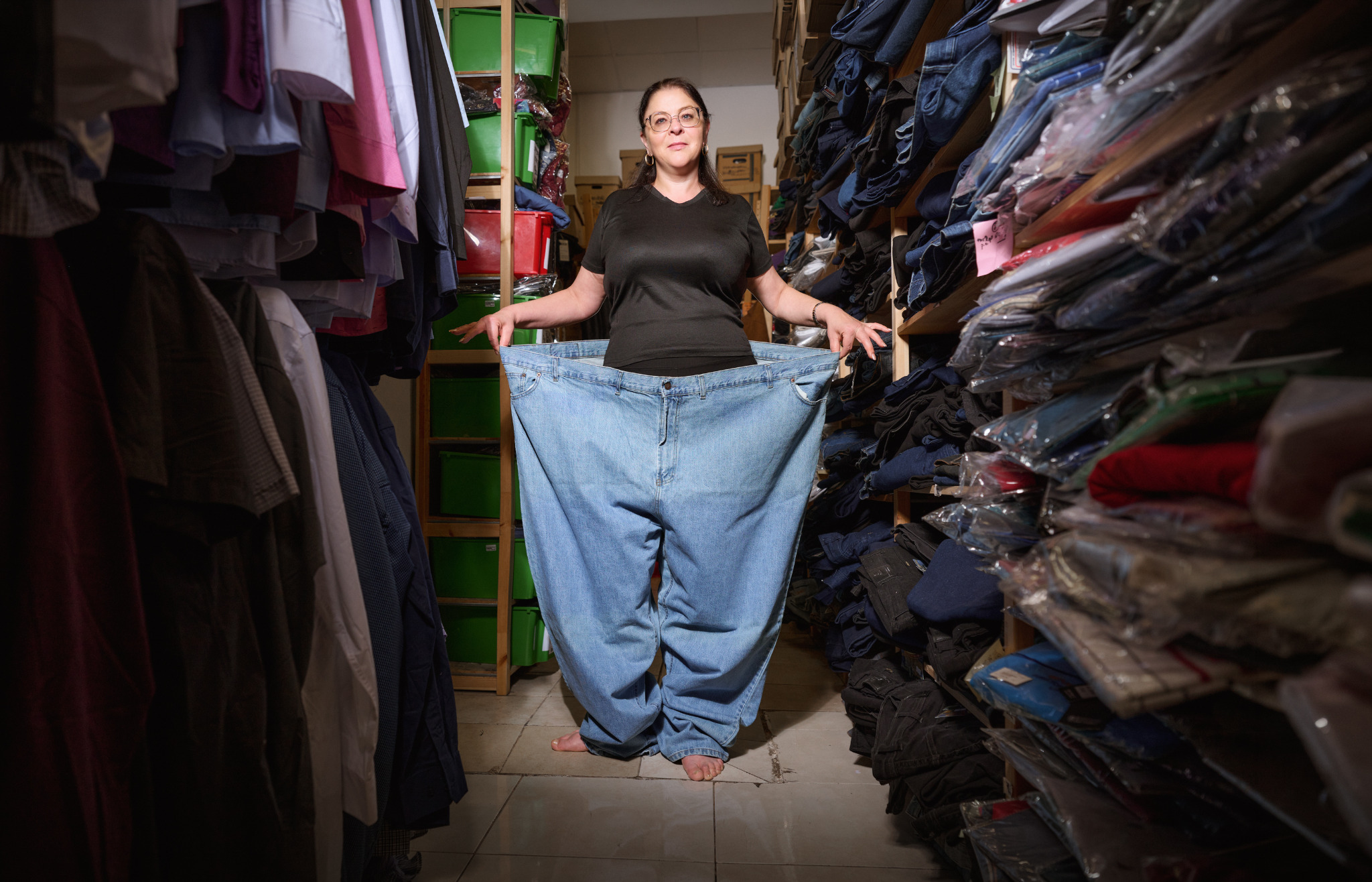
Julia Waldman stands in a clothing store, holding a pair of wide jeans in front of her
15 / 15
Portrait 15 / 15

Never Give Up

Julia Waldman

Cushing’s syndromePetah Tikva

At 41, Julia Waldman, now 46, began experiencing headaches and changes in her vision. An MRI revealed a tumor in her pituitary gland. Further tests showed elevated cortisol levels, leading to a diagnosis of Cushing’s syndrome and dramatic changes in her body.

After surgery to remove the tumor and medication, Julia lost around 40 kilograms and gradually returned to everyday life. In the photograph, she stands in a clothing store holding an enormous pair of jeans from another period of her life. The garment, once her size, has become tangible evidence of the journey she has made.

But losing weight did not end the struggle. The possibility that the tumor could return calls for ongoing monitoring, and anxiety about the unknown is still with her.

Alongside it all, Julia continues to work at an insurance company and raise her son, who is on the autism spectrum.

She has learned that we cannot always control what happens to our bodies. We can choose not to give up.

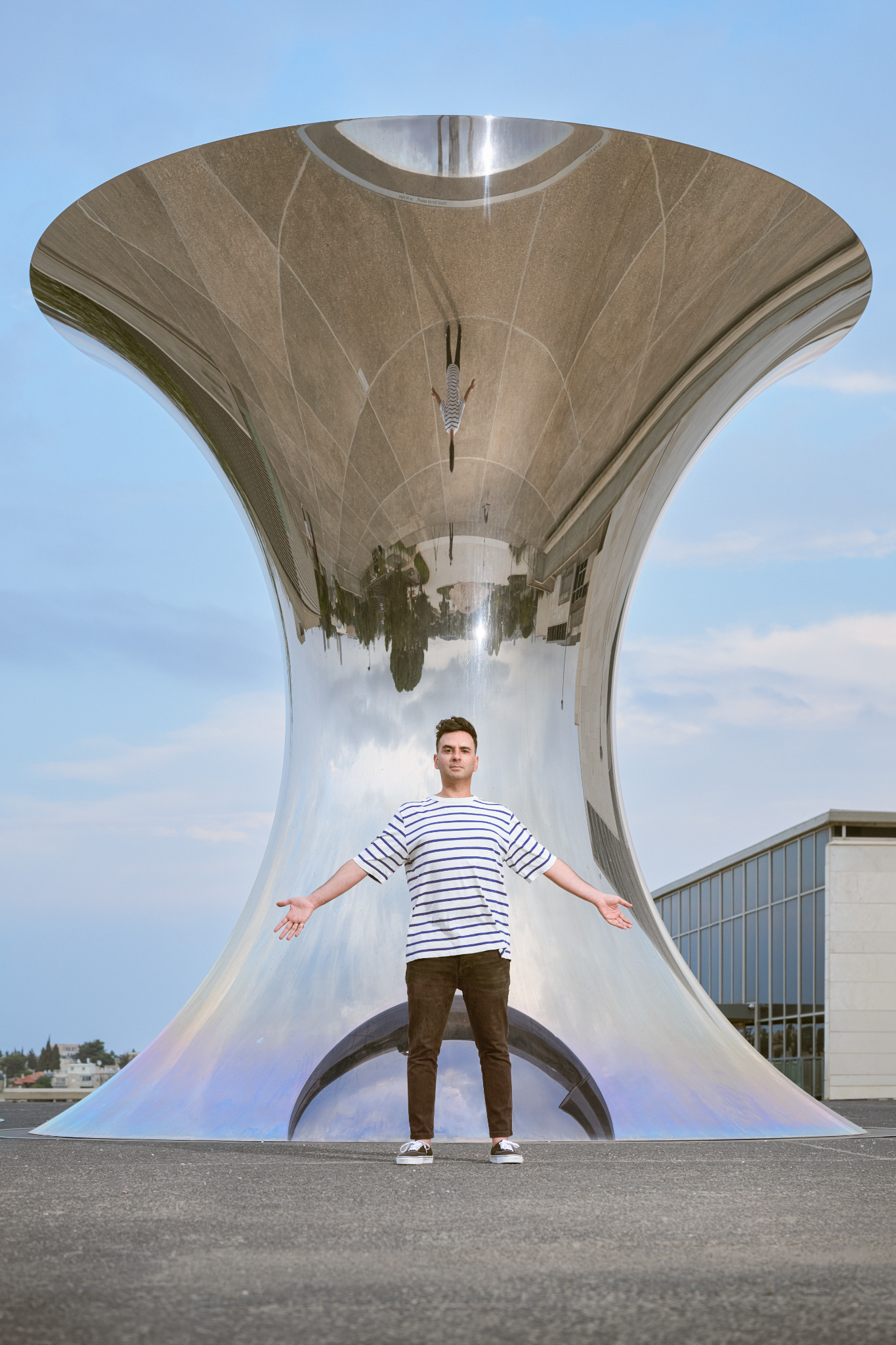
Alon Konforti stands with arms outstretched before Anish Kapoor’s Turning the World Upside Down, his reflection suspended upside down above him
An additional portrait
Beyond the fifteen portraits

An additional portrait

World Upside Down

Alon Konforti

Pituitary microadenoma, adrenal insufficiency, osteoporosis and thyroid cancerRamat Gan

At 41, a fall that fractured his ribs led Alon Konforti, now 43, to the chance discovery of a benign tumour in his pituitary gland. Three months later, he fractured his ribs again. Surgery to remove the tumour was complicated by bleeding and a prolonged hospital stay.

After the surgery, his body stopped producing cortisol, and he was later diagnosed with osteoporosis. Follow-up tests also revealed thyroid cancer. Another operation damaged his vocal cords, leaving him barely able to speak for weeks.

With his partner Yuval and their two children beside him, Alon learned to trust his body again. Treatment improved his bone density, his voice returned, and he resumed sport.

In his portrait before Anish Kapoor’s “Turning the World Upside Down” at the Israel Museum, Alon stands on solid ground, arms outstretched, while his reflection hangs inverted above him. The mirror distorts reality, much as the diagnoses and surgeries turned his world upside down, but it does not change the person standing before it.

After everything his body has endured, Alon continues to stand on his own feet, raise his children and see himself as a healthy person.

The person behind the camera

About the artist

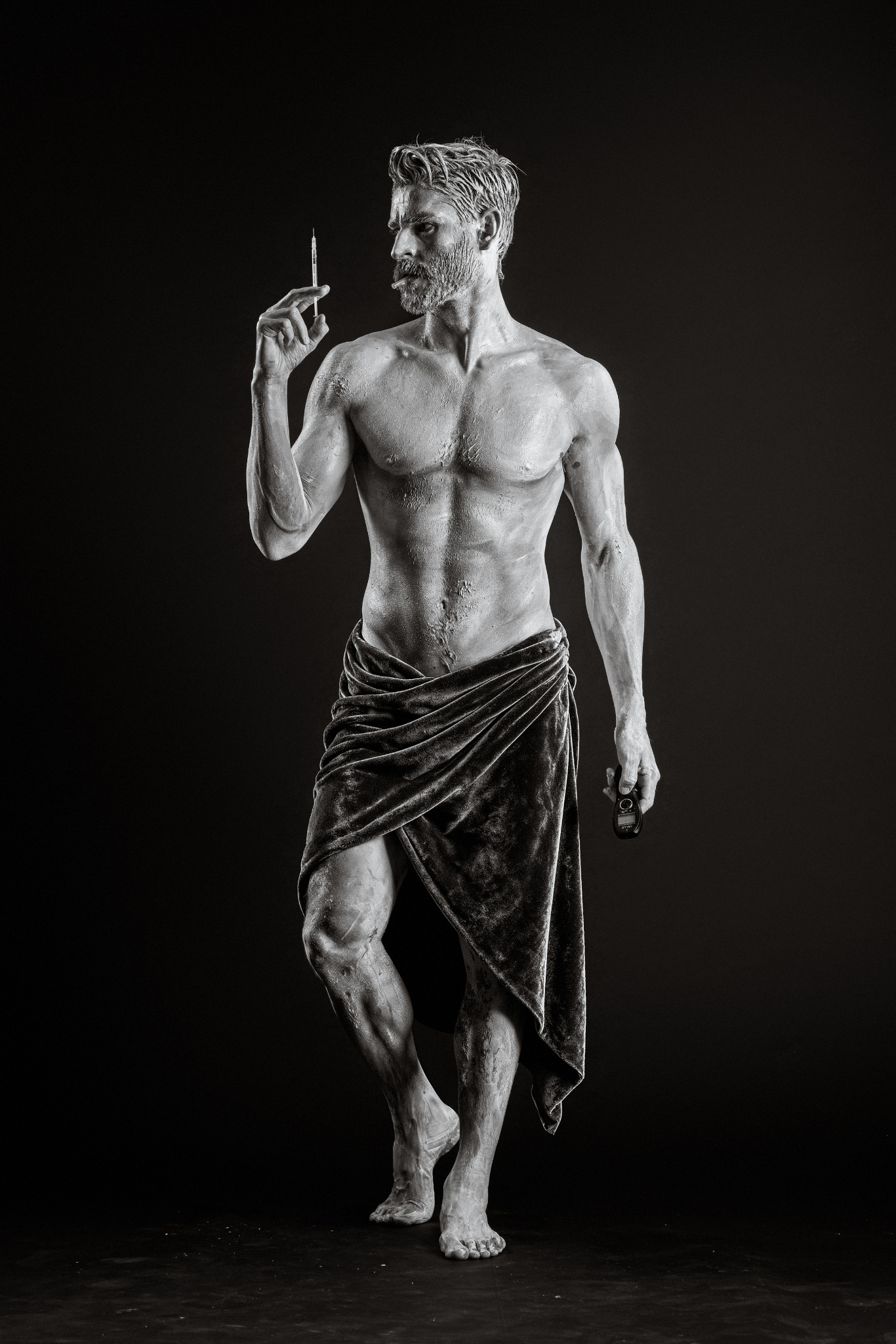
Pini Siluk’s self-portrait facing forward, his body painted like a marble sculpture, holding a syringe and a glucose meter
16
Self-portrait · 2014 · 16

“A Healthy Mind in a Healthy Body”

Pini Siluk

Type 1 diabetesTel Aviv–Jaffa

In ancient Greece, the human body was sculpted as an ideal of strength, beauty, and perfection. Centuries later, Renaissance artists, led by Michelangelo, drew inspiration from those sculptures and gave the human form an almost divine presence.

To me, the Renaissance is the most fascinating period in the history of art, and Michelangelo is my favorite artist of all time.

I have lived with type 1 diabetes since I was 11. At 16, I began bodybuilding, and for years I trained intensively with weights. For me, building my body was about far more than outward appearance. It was my way of reminding myself that my body was strong and healthy, despite diabetes — and perhaps because of it.

In this self-portrait, I transformed my body into a living sculpture after hours of painting it with acrylics. The muscular body, seemingly carved from marble, stands against another reality: around five insulin injections a day and frequent glucose checks, necessary to keep me alive.

Through this photograph, I seek to question the connection between outward appearance and health, and to remind myself and others that a healthy body is not necessarily a body without illness.

Because, to me, true strength is not the absence of vulnerability, but the ability to live, create, and grow alongside it.

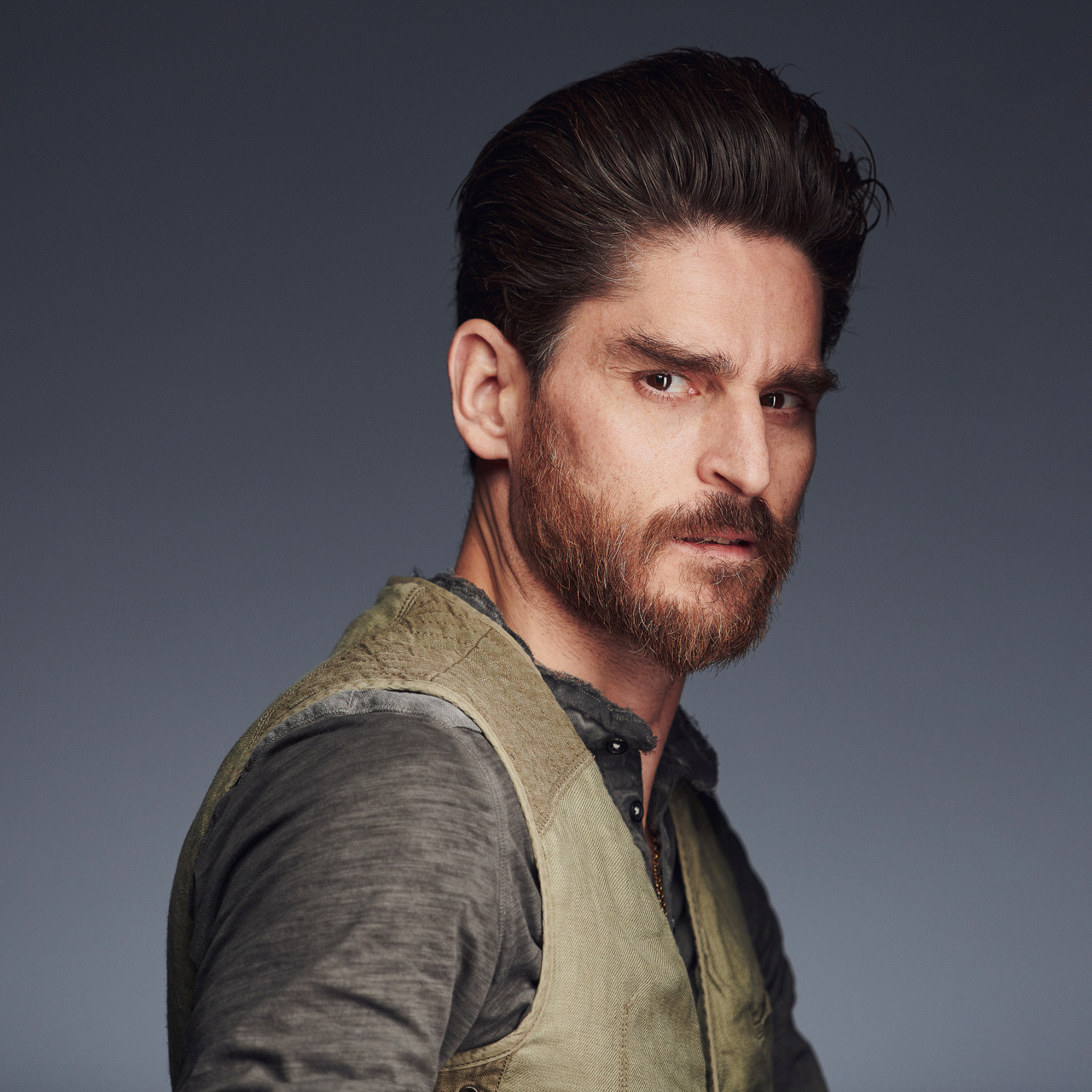
Self-portrait of Pini Siluk against a dark background.
Pini Siluk · self-portrait

Pini Siluk is an Israeli photographer and artist based in Tel Aviv–Jaffa. His work spans staged portraits, image manipulation, video art, and performance art.

His portraits have appeared on more than 300 magazine covers, and his work has been exhibited in Israel and abroad. In 2016, he founded the Rinascita art museum at Burning Man. For years he has also been working on his photography project “The Family of Israel.” More about his work (Hebrew; opens in a new tab).

Behind POSITIVE

I am the father of four-year-old Rafael. I have lived with type 1 diabetes since I was 11, for more than three decades. I monitor my blood glucose with a sensor and inject insulin with pens about four to six times a day.

The two great loves of my life are photography and being Rafael’s father. My work brings me to life; it gives me fulfillment and purpose. When I take photographs—or even when I am thinking about what to create and how to make an image—I get a chance to live, for a moment, “outside my own head” and the endless thoughts running through it.

Creativity is my playground. When I make art, I feel again like the 11-year-old boy who learned he had diabetes and found relief from pain and sorrow in creating.

This exhibition lived in my head for almost twenty years. It came to life when the endocrinology institute at Sheba invited me to join its vision for the visitor centre, and I set out in partnership with the curatorial team and the Institute’s physicians. Knowing that these portraits hang in the clinic where people like me come for treatment fills me with pride and a sense of purpose—as a photographer, a father, and someone who lives with a chronic condition.